The DIY House Build - Pt 2
While working on hanging and finishing drywall in Midway, back at my workshop in Oliver I was slowing building our kitchen cabinets and other built in furniture and finishing details for the house. Originally we were planning to go with an IKEA kitchen but after seeing the build quality, I decided to build everything myself for roughly the same cost. This isn’t something I’d do again and is probably the thing I’m most unhappy with in the house.
The kitchen was redesigned a few times from when we first had the drafter draw up the plans. Originally we were planning to have no island and a small dining table but ended up going with an island instead for more countertop space and storage.
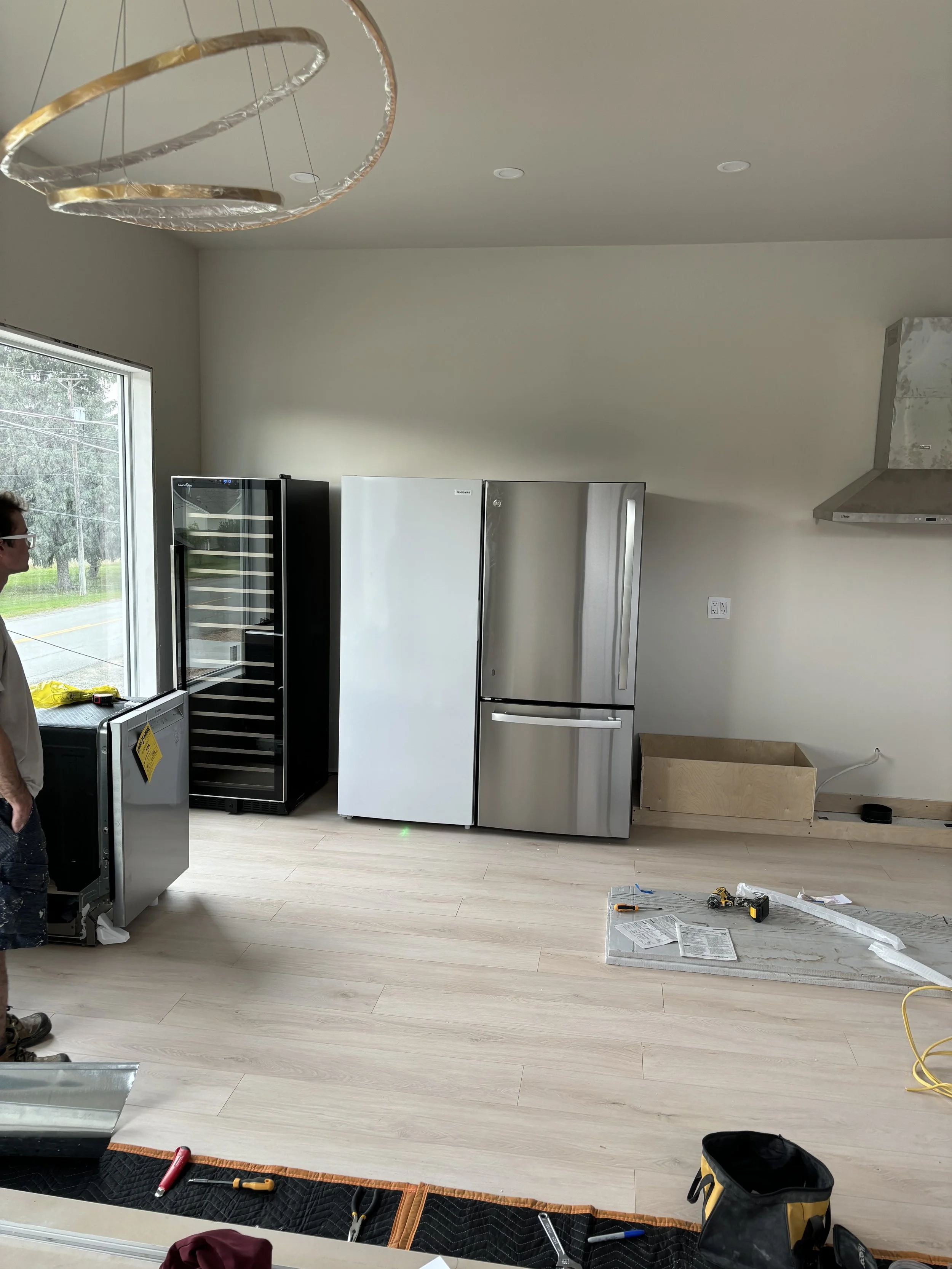
A few unusual details in our kitchen are that it was designed to leave enough space for a number of fridges and freezer - the regular fridge, an upright freezer, a wine fridge, and a stack of mini fridges used for making cheese, cured meats, and fermentation - and while we have a built in induction cooktop, there’s no built in oven. Instead, we use 2 countertop ovens. Usually cooking for 2 people, I have no need for a full sized oven (I can still roast a whole chicken) so the smaller ovens are more efficient, still allow me to have roughly the same amount of tray space, allow for independent temperature control, and cooking things better overall with better temperature control, airflow, and steam functionality. Plus, when something inevitable breaks, we only have to replace a $1000 appliance instead of an entire $3000 range.
The countertops are butcher block pieces I ordered and finished with spar urethane. This was largely a financial decision since we’re able to cut and install it ourselves. We have to be a little more careful than certain stone counters but once it gets beat up we can always refinish it.

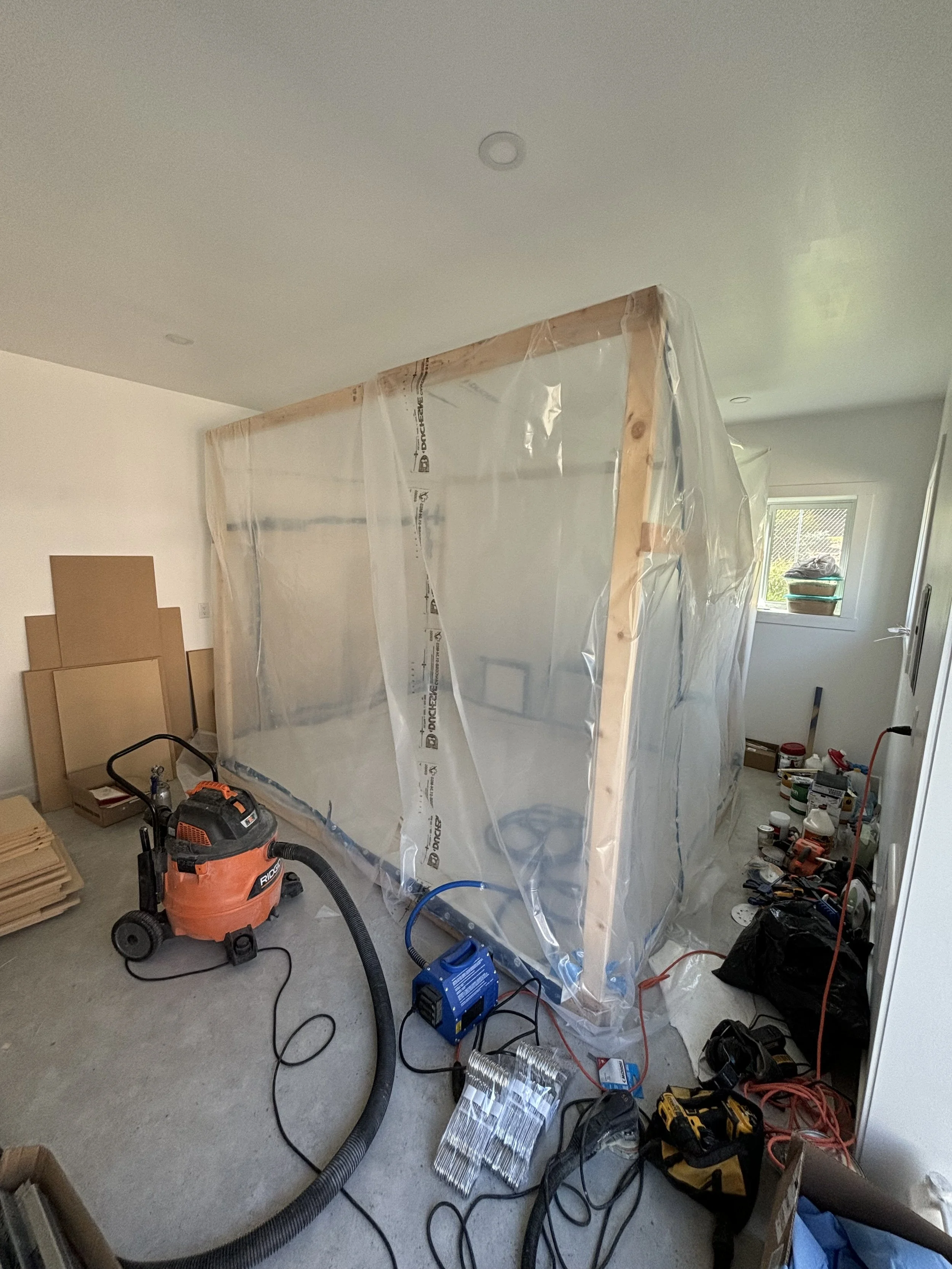
With the counters being butcher block, I decided to go with painted cabinets. This included the bathroom vanity where I stained a butcher block offcut just to have it be a little different and the rest of the cabinet is painted. This is where things didn’t go well. Any woodworker will tell you that the most difficult part to high end projects is finishing. Especially painting and you get into the territory of automotive finishing.
I spent many months researching painting cabinets, testing different paints, and doing countless tests with different finishing processes. I was using an HVLP gun and despite that, the end result didn’t end up being as smooth as I would’ve liked it to. It also ended up being very fragile so many of our cabinets already have scratches and spots where the paint chipped off. Particularly in the corners which ended up being a little too sharp after all of the sanding and prone to chipping.
What I later learned is that while many high end cabinets use MDF, they’ll use a coated product like melamine and that’s the only way to get a completely smooth finish. The issue wasn’t the products I was using or the spraying. Unfortunately it means most of my efforts were wasted. Sanding, bondoing edges, sanding, 2 coats of sealer, sanding, 2 coats of primer, sanding, 3 coats of paint.
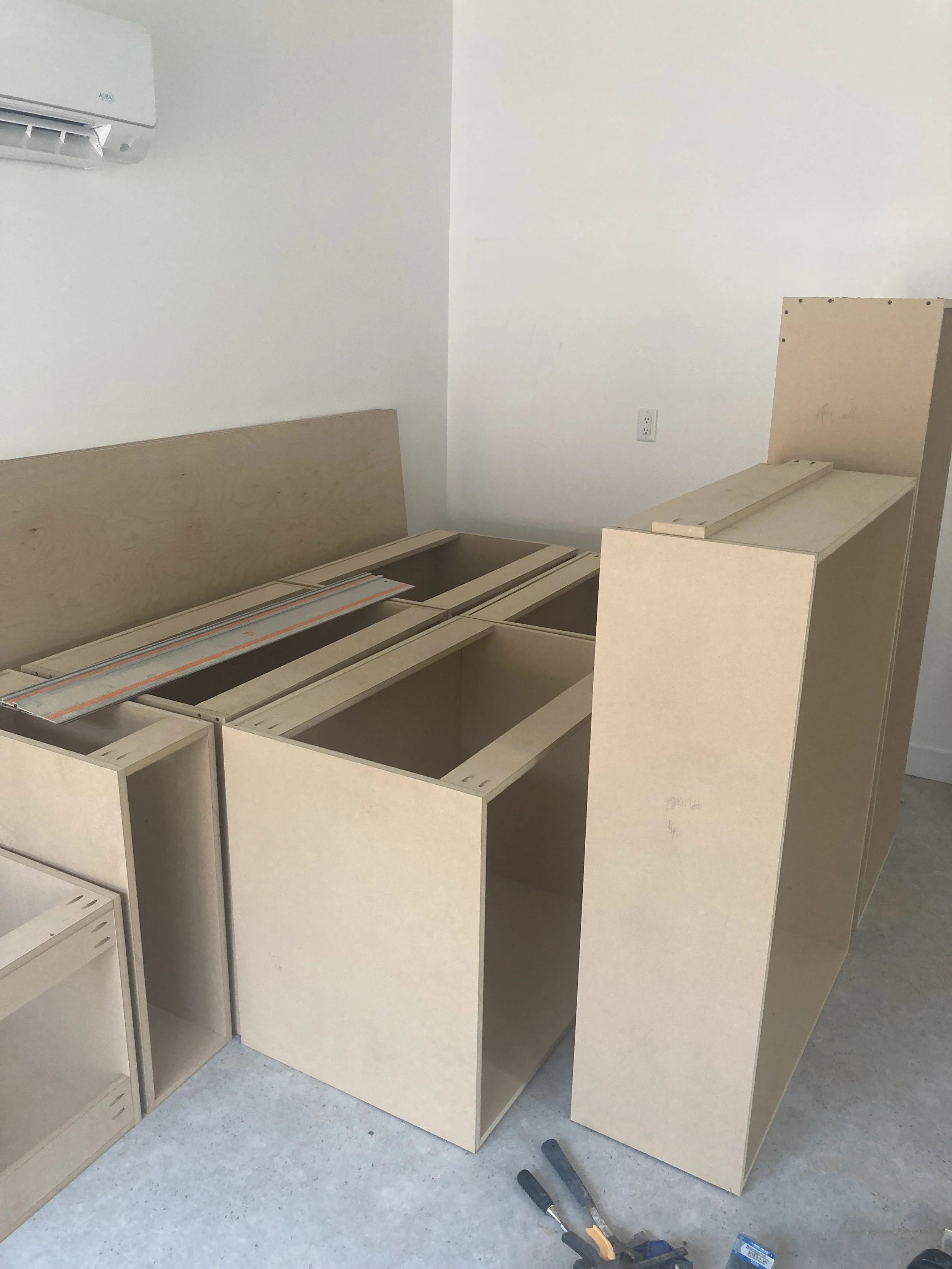
Some of the other things I was working on were a cabinet for the bathroom, the bookcase and rolling ladder for the living room, the guardrail upstairs, the guardrail on the side of the stairs, a folding table and shelves for my electronics bench, the bookcases for the studio, and a few small hardwood pieces like some coat racks, nightstands, wine glass holder, and knife holder.
It was very fortunate that a new friend in the area had a sawmill and custom cut some larch for us which we used for the guardrail, kitchen shelves, and kitchen island and makes the upstairs feel cohesive.
Back in Midway we were on to priming and painting. This didn’t take too long and then the electrician was back to do most of the finishing work which included installing all of the light fixtures.
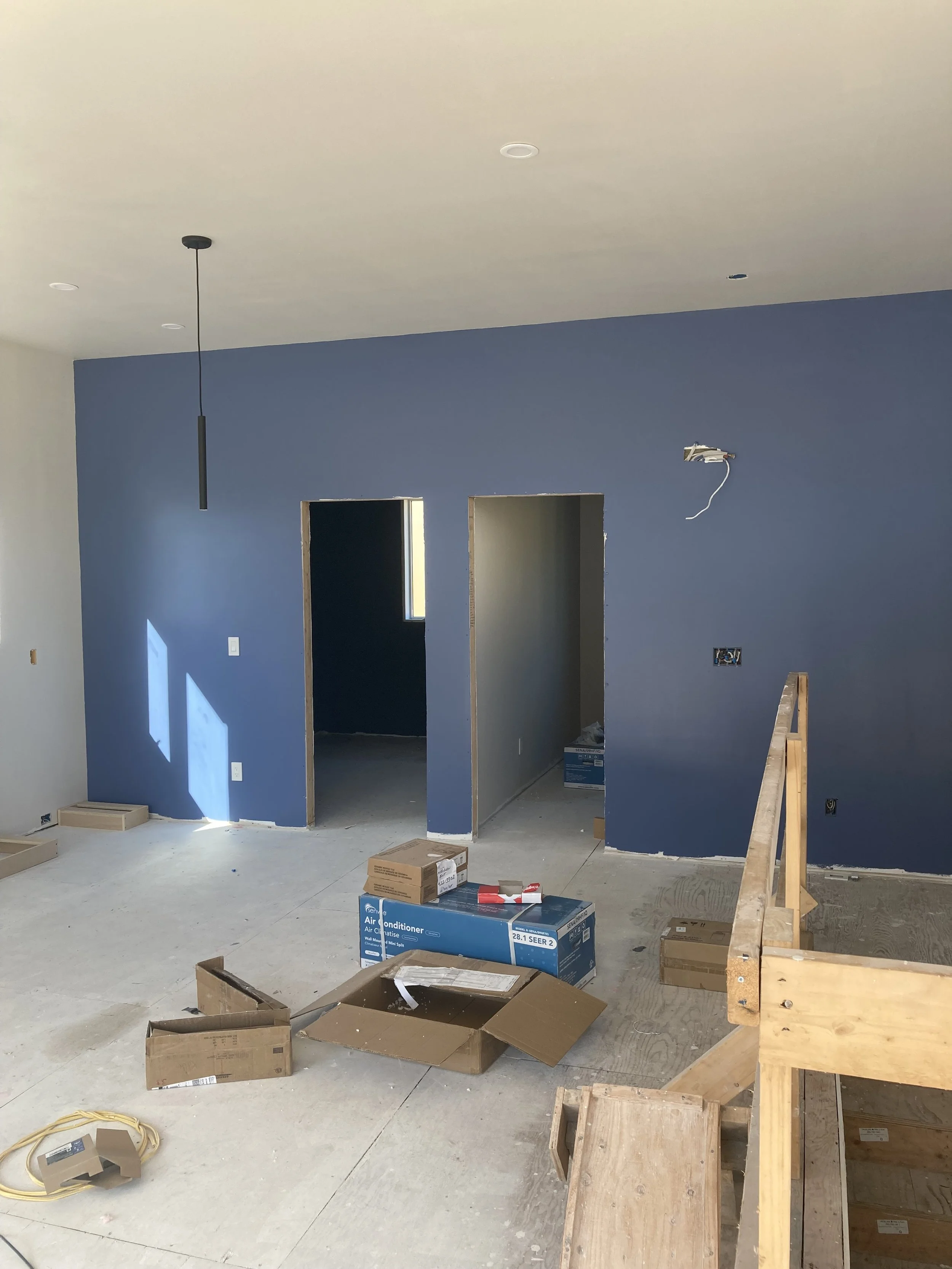
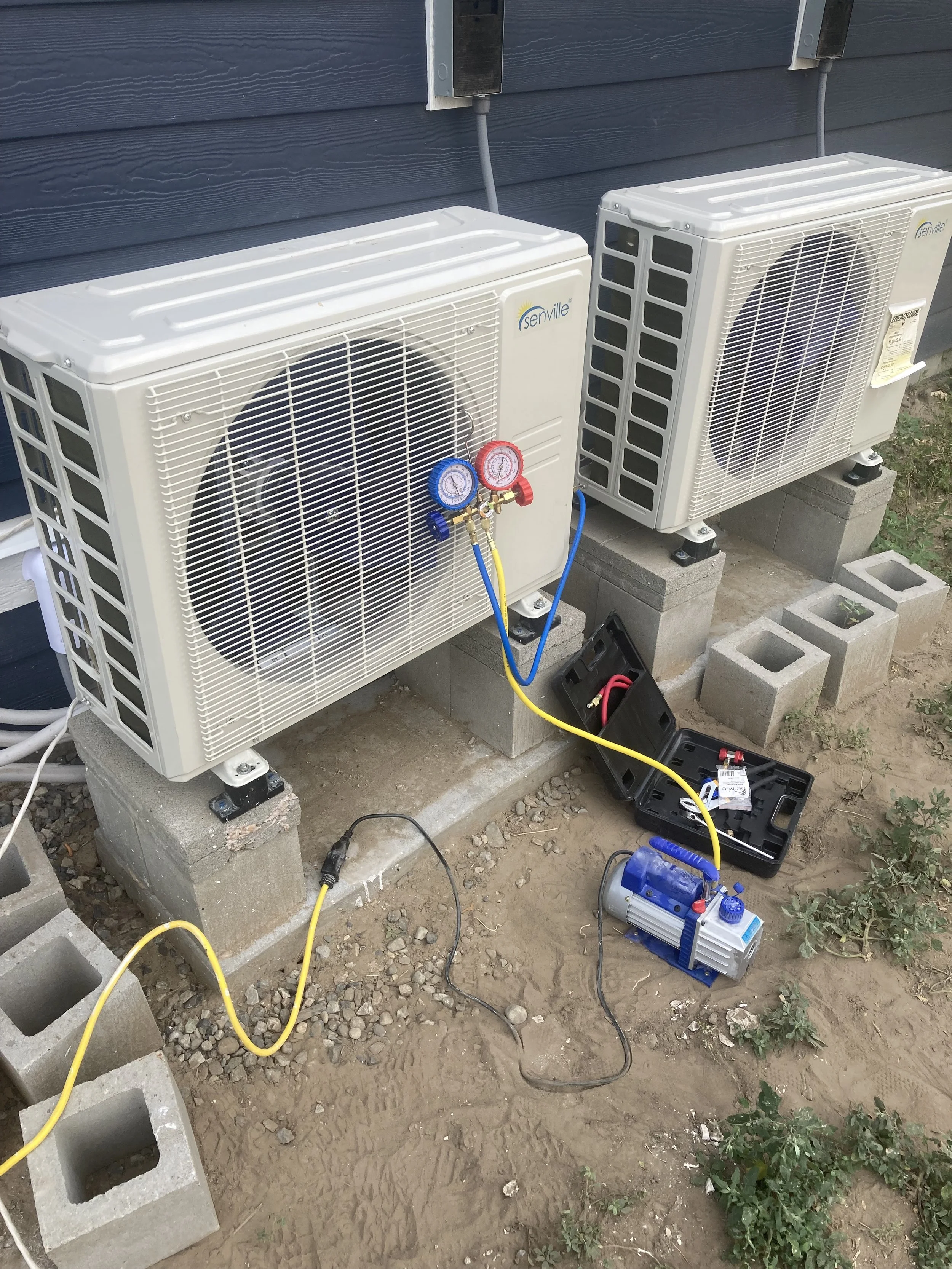
Originally I had planned to install the mini splits before drywall so that we could heat the house but that would make things a lot trickier with having to work around them plus the weather wasn’t too cold anymore once we got to drywalling so I waited until painting was finished.
As I mentioned in the previous post, it’s generally not too bad to install a simple mini split system but when it comes to getting the lines through many walls, it’s not easy. Thankfully hooking everything up wasn’t too difficult and just requires vacuuming down the lines. It was now July and we could thankfully have AC.
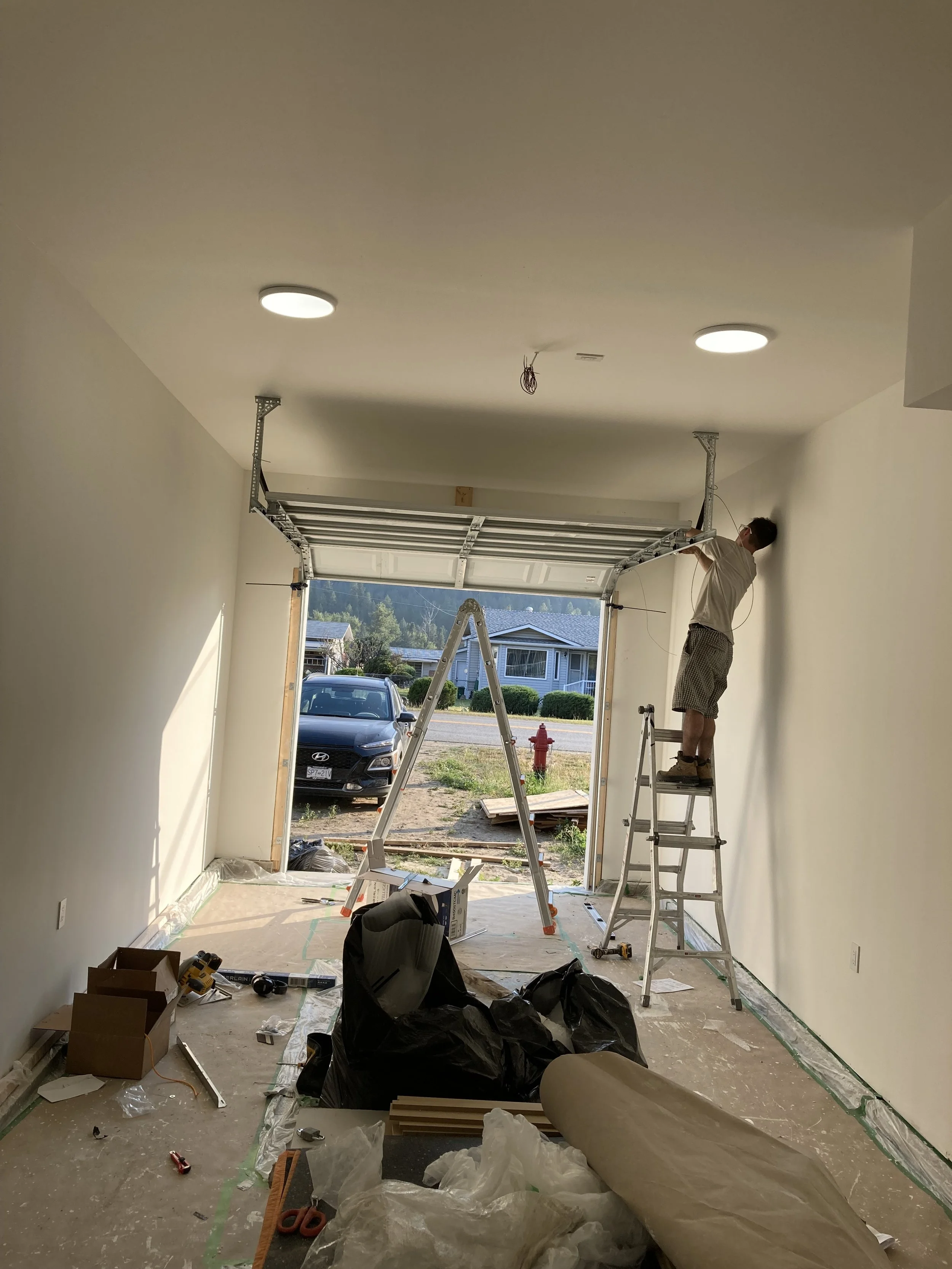
Next up was installing the garage door. The process was pretty straightforward. The challenge here was getting the door itself. It’s surprisingly difficult to order one in Canada (instead of going through an installer) and with the specific size we needed, the only option was one door Home Depot offered. If it weren’t for that one option I would’ve had to hire an installer. They cancelled my order saying they couldn’t deliver it here, then offered to deliver it for an extra fee, then cancelled again, and I finally ordered to pick it up at the location in Kelowna. All in all it took around 4 months to get the door. We did eventually add insulation to the door which made a massive difference so the garage stays warms in the winter and cool in the summer.
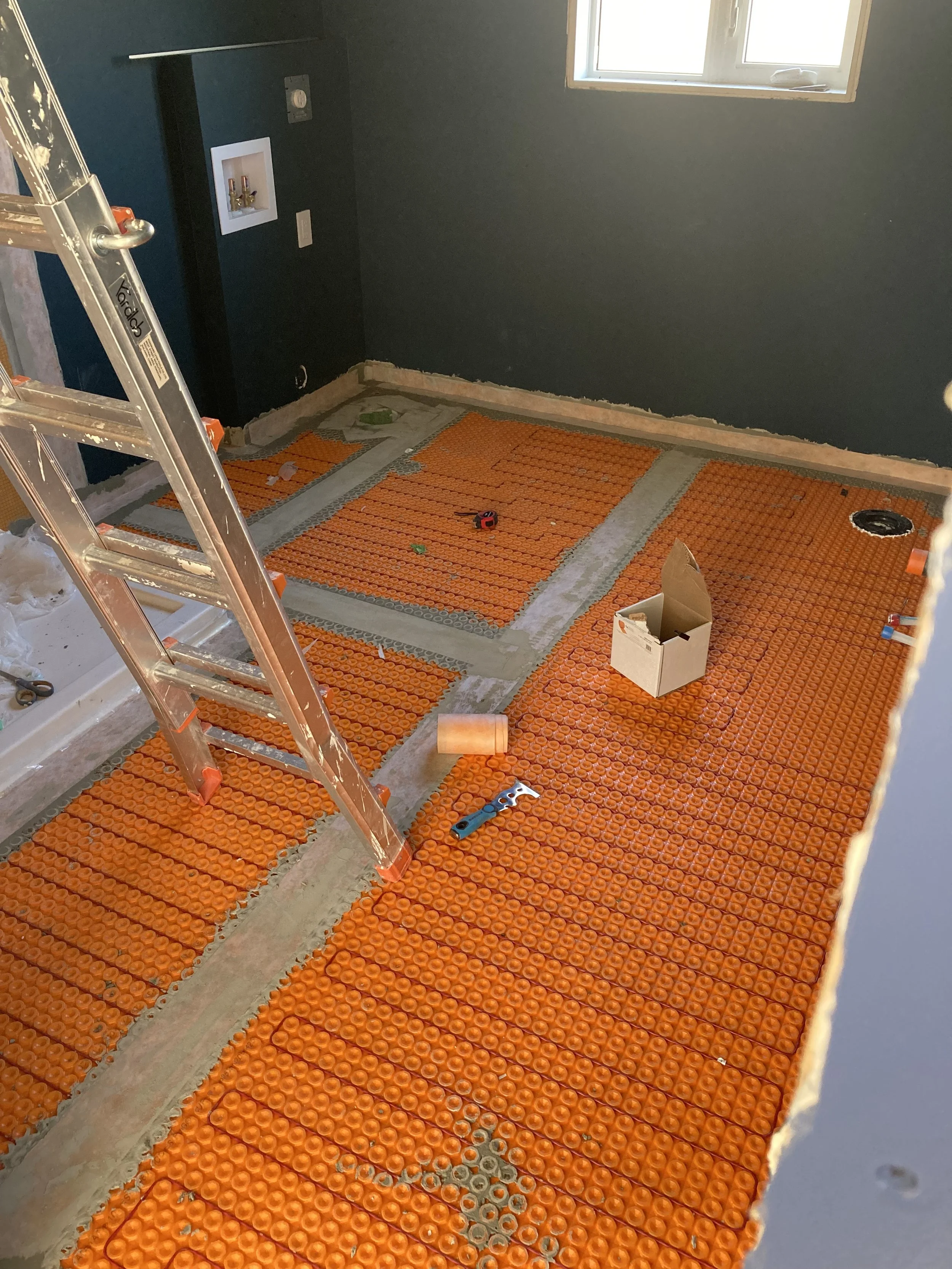
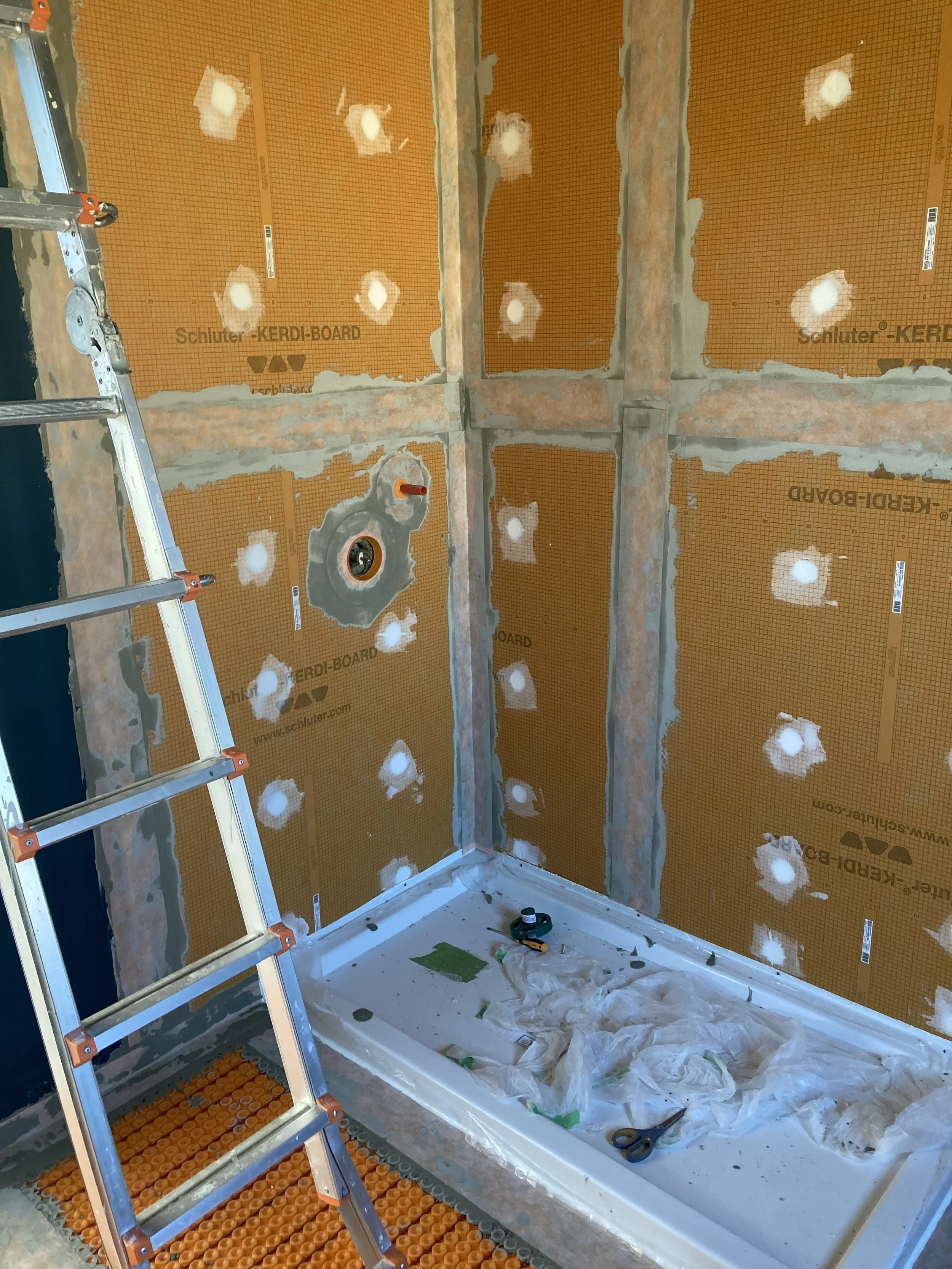
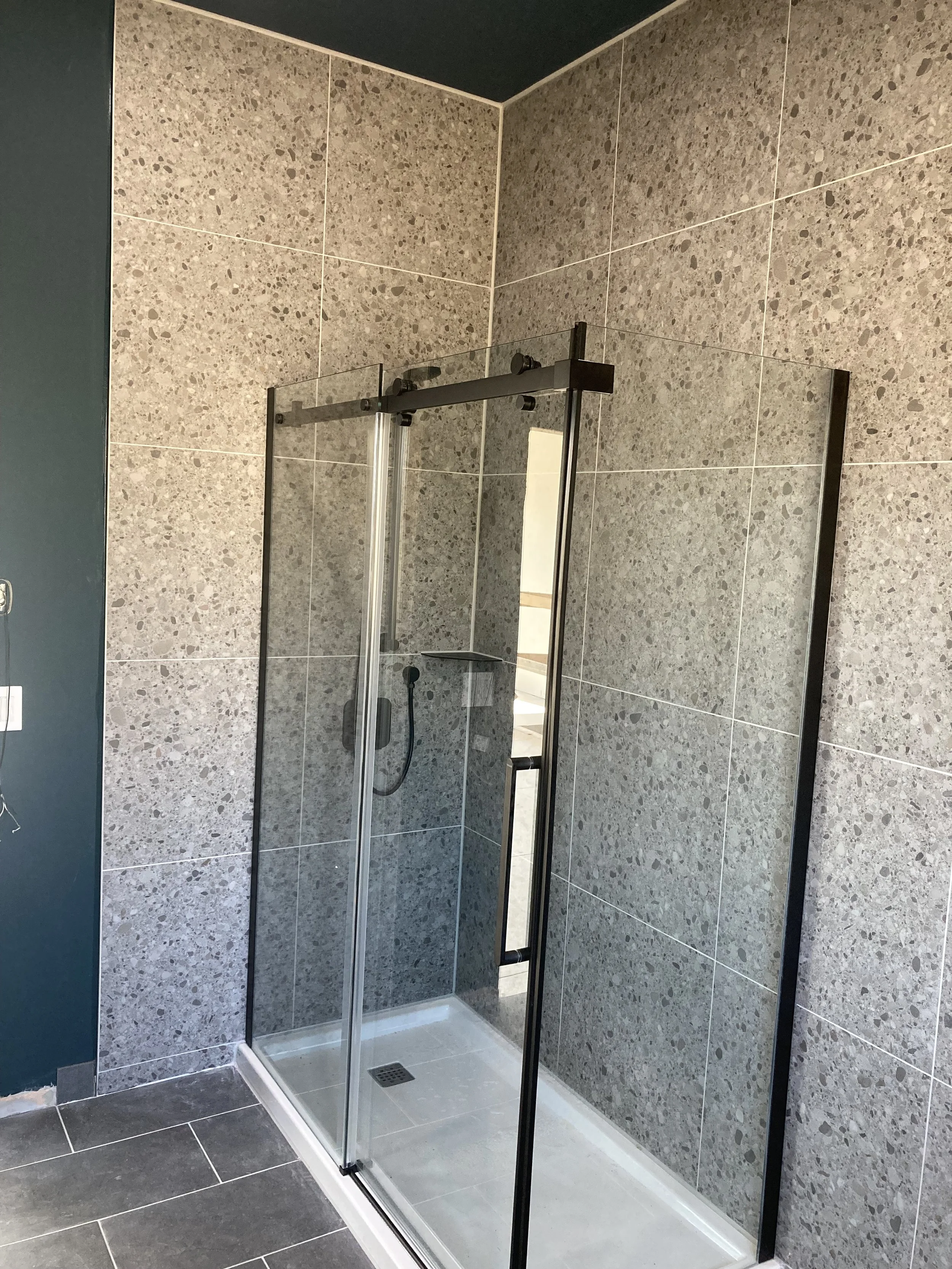
One of the biggest tasks left was the bathroom. Having never done any tiling before, it was a little daunting with countless ways we could mess up. Thankfully it all went as well as we could’ve hoped! While we did all of the tiling and prep ourselves, our plumber installed the fiberglass shower pan and the glass shower door. Having learned that tiling isn’t too tricky, I’d go with a tiled shower base not only for looks but also for durability. I’m sure we could install the shower door ourselves but I just didn’t want to be responsible for that and potentially installing it wrong or breaking the glass.
We started with the underlayment for the in-floor heating and waterproofing for the shower walls. Then came tiling and grout and finally the plumber came back to install the door and plumbing fixtures.
Considering that downstairs was polished concrete and the bathroom was tiled, there wasn’t much flooring left to do. Just the kitchen and bedroom. Originally I wanted to go with engineered hardwood but there are some higher end LVP options which look almost identical and are half the price. Ultimately it came down to durability considering we have dogs. I wouldn’t mind a hardwood floor that would get scratched up and eventually refinished but with engineered hardwood, that’s not really possible and it becomes very difficult to repair once it inevitably gets damaged.
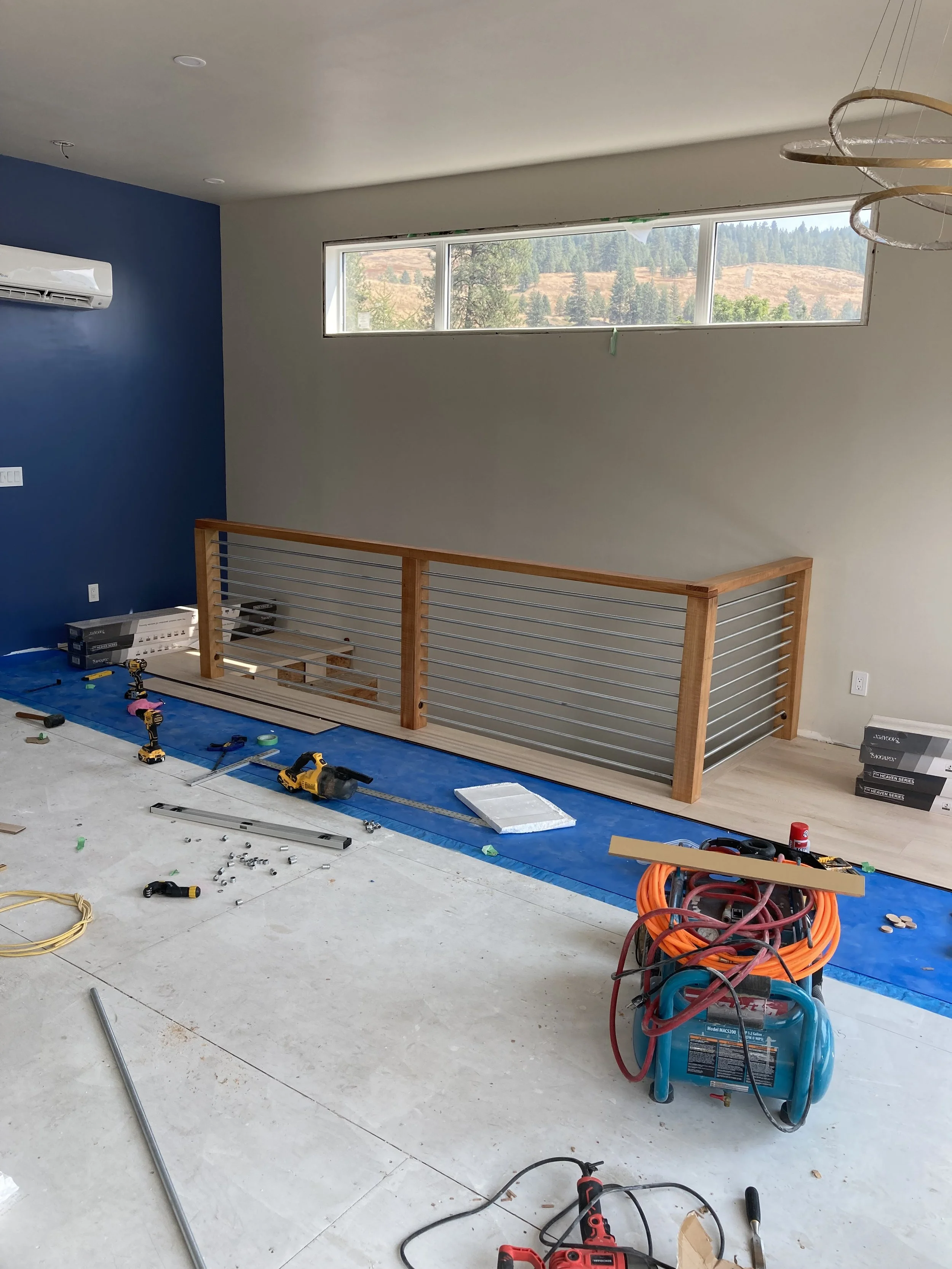
Installing the flooring was a matter of days and at the same time we put up the guardrail upstairs. The wood came from our friend and then we attached conduit to a drill to polish it. It ended up being more of a “brushed” finish rather than actually polished but was a fraction of the cost of polished steel tubing.
We got some very nice custom nosings for the flooring on the stairs (which cost about as much as all of the rest of the flooring!) but unfortunately the flooring on the stairs didn’t turn out great with large gaps at the edges. I thought we could get away with not using a tool for tracing out the exact shape of each step to cut the planks to but that wasn’t the case and we didn’t have many spare pieces left to be able to fix what we messed up.
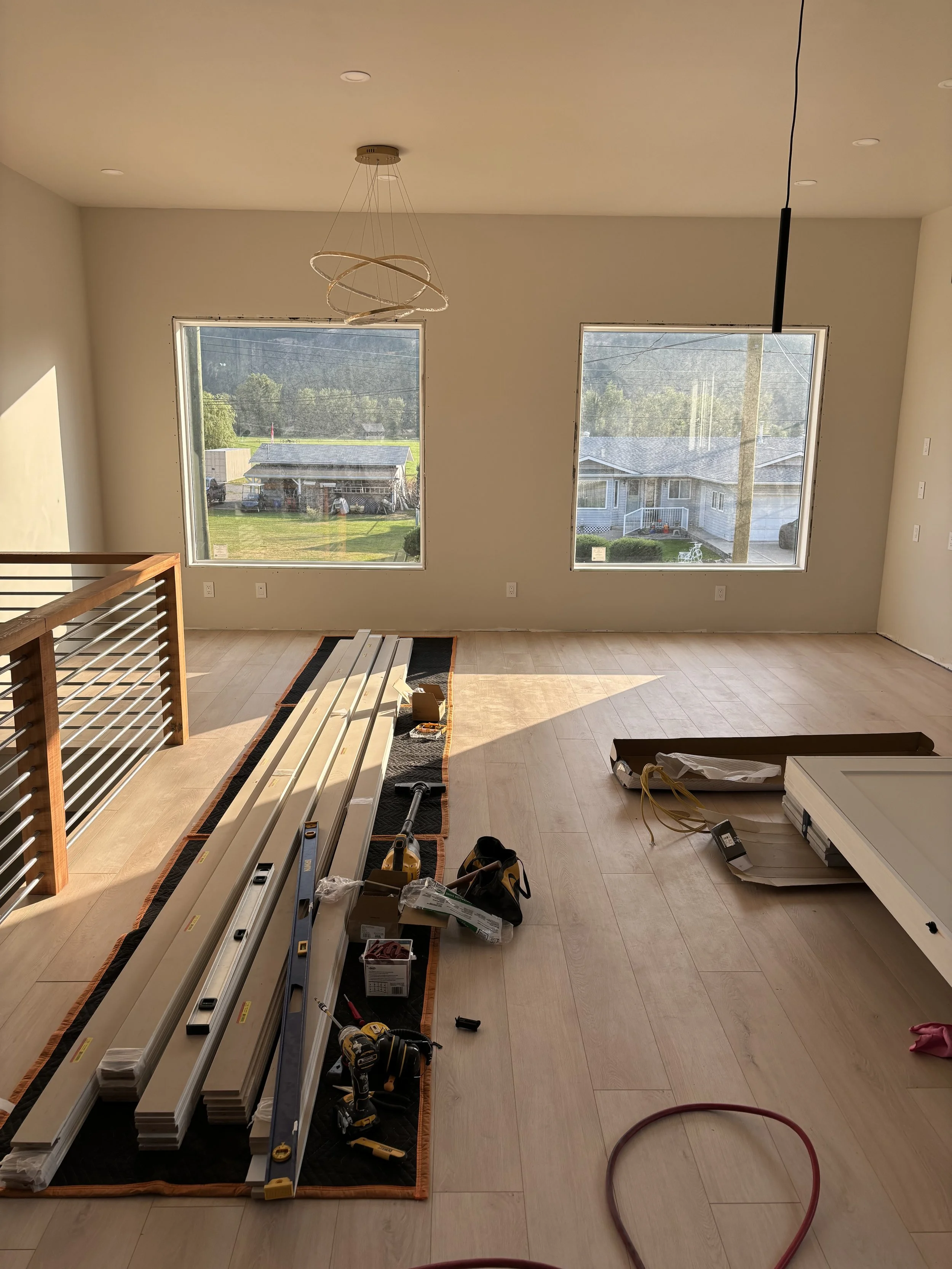
It was now the end of August and we got our appliances delivered. A couple of small tasks we did in the meantime were installing the interior doors, the HRV, and the range hood. In the last part of this series we’ll wrap up construction.