Why Your Atmos System Doesn’t Work
Most Atmos systems I see use different speakers around the room. Unfortunately that doesn’t work. This usually stems from either adding an Atmos system to an existing stereo setup or designing a new system where you get larger higher end speakers for the LCR prioritizing those speakers. Let’s have a look at why this isn’t a good idea.
This approach isn’t too big of a deal in the film world where fidelity ultimately isn’t all that important. If something is a little funky with the ambience tracks or FX most people won’t notice and it will be played back on all sort of different systems so the mixes are crafted in such a way that these issues will me minimized. Consider that people sitting in a theatre will be at completely different distances to each speaker so they need a mix which works everywhere in the theater. This limits what you’re able to do as a mixer.
Things are very different when it comes to mixing music for Atmos. The fidelity expectations are much higher and you’re generally crafting a mix in a more nuanced way like you’d approach a stereo mix. Most mixers I know don’t go stand way off in the corner to judge if the stereo imaging is still working well in a mix. They’ll mostly do that from the appropriate mixing position. It’s generally assumed that Atmos music listeners will similarly be seated in a reasonable location in the room where subtle mix elements will carry through and create a great listening experience similar to stereo. Of course with binaural and Spatial Audio the listener will always be centered.
The wisdom usually passed down from dealers, speaker companies, studio designers, and even Dolby themselves is you should use speakers from the same manufacturer and that’ll work. Unfortunately that’s not the case and it comes down to the phase response. In most speakers (we’ll look at exceptions later) the crossover introduces phase shift. That’s a natural part of using minimum phase filters (your typical EQ). This phase shift means some frequencies are delayed more than others. If you send multiple frequencies to the speaker at the same time it’ll play some and then at a later point in time it’ll play the others. Of course this happens in a very short timespan so you don’t perceive it so discretely.
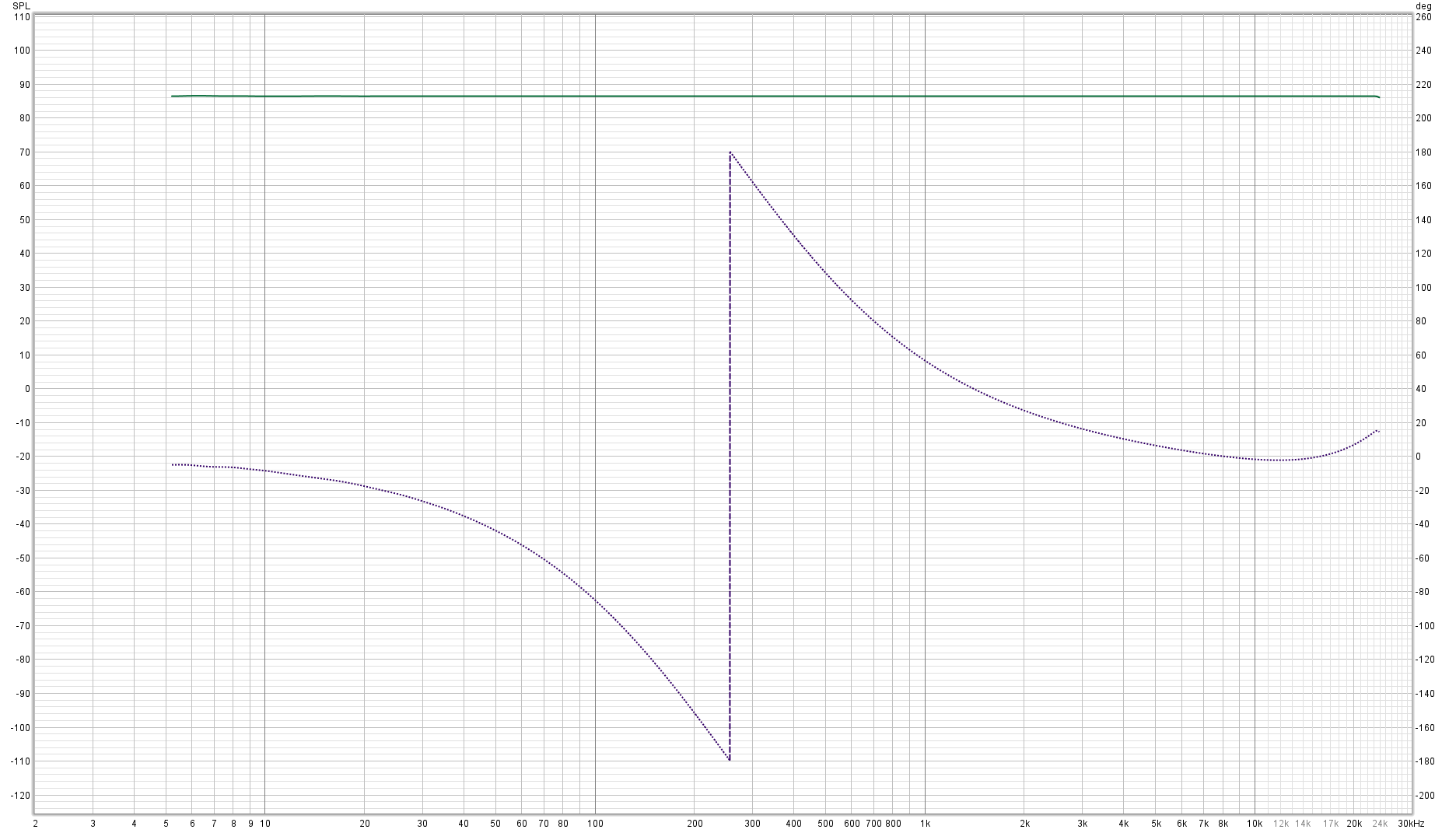
Let’s look at a theoretical 2-way speaker with an entirely flat frequency response. In the image below you’ll see a straight line which is the frequency response and a curved line which is the phase response. The discontinuity in the phase response happens because we’re looking at a “wrapped” graph meaning we keep things between 180 and -180 degrees. When it goes beyond that, it gets wrapped back around so we can see everything within a small window. If we unwrap it, the line would keep extending up and that’s what happens in reality.
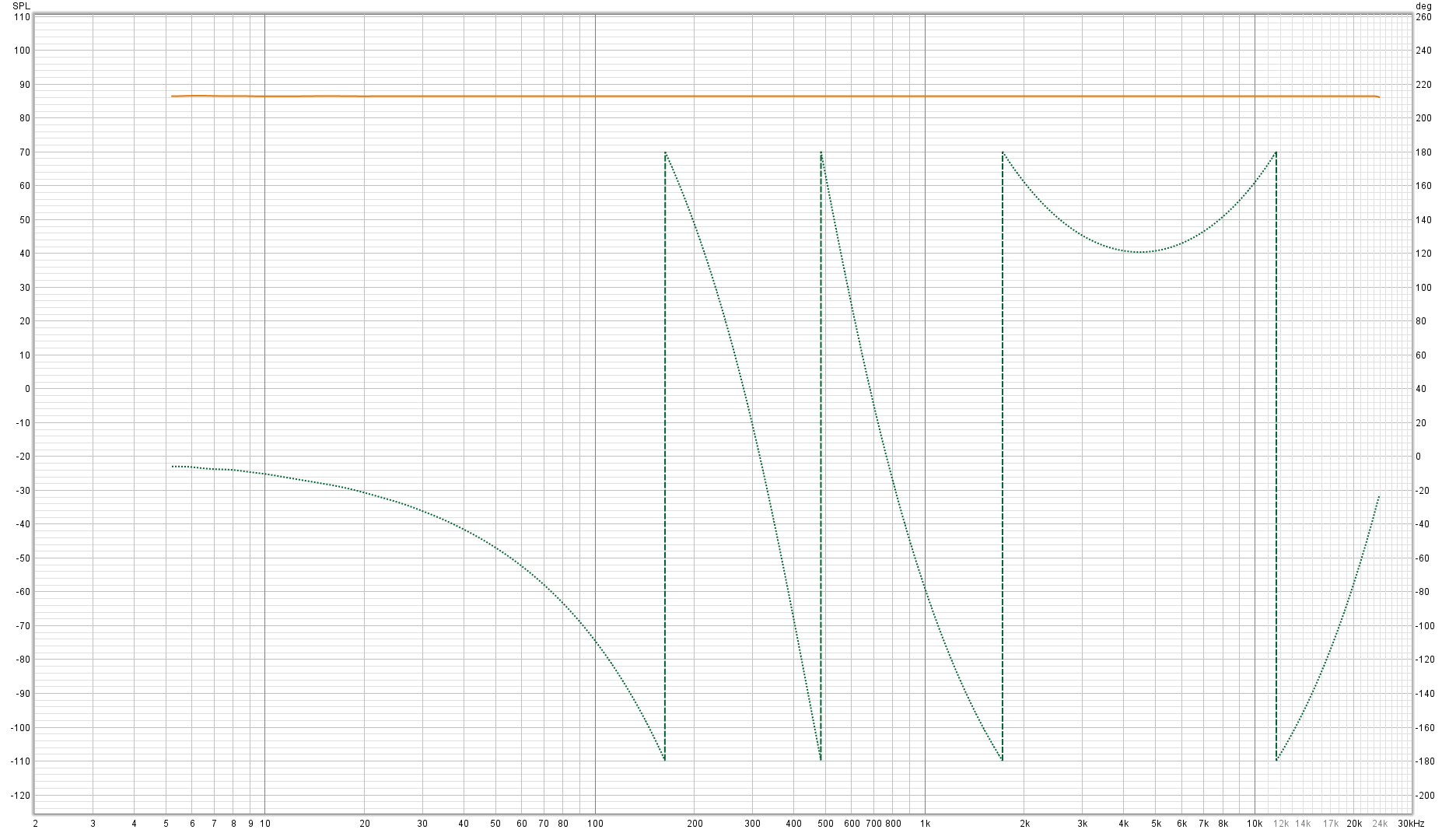
Now let’s look at a theoretical 3-way speaker which also has an entirely flat frequency response. Because there are more crossovers, we end up getting more phase shift.
Now let’s have a look at what happens when you play both speakers the same time. This is what would happen when you pan a signal between them. If you pull an object “into” the room in Atmos or push it up towards the heights then you’d also have the interaction with more speakers in the room.
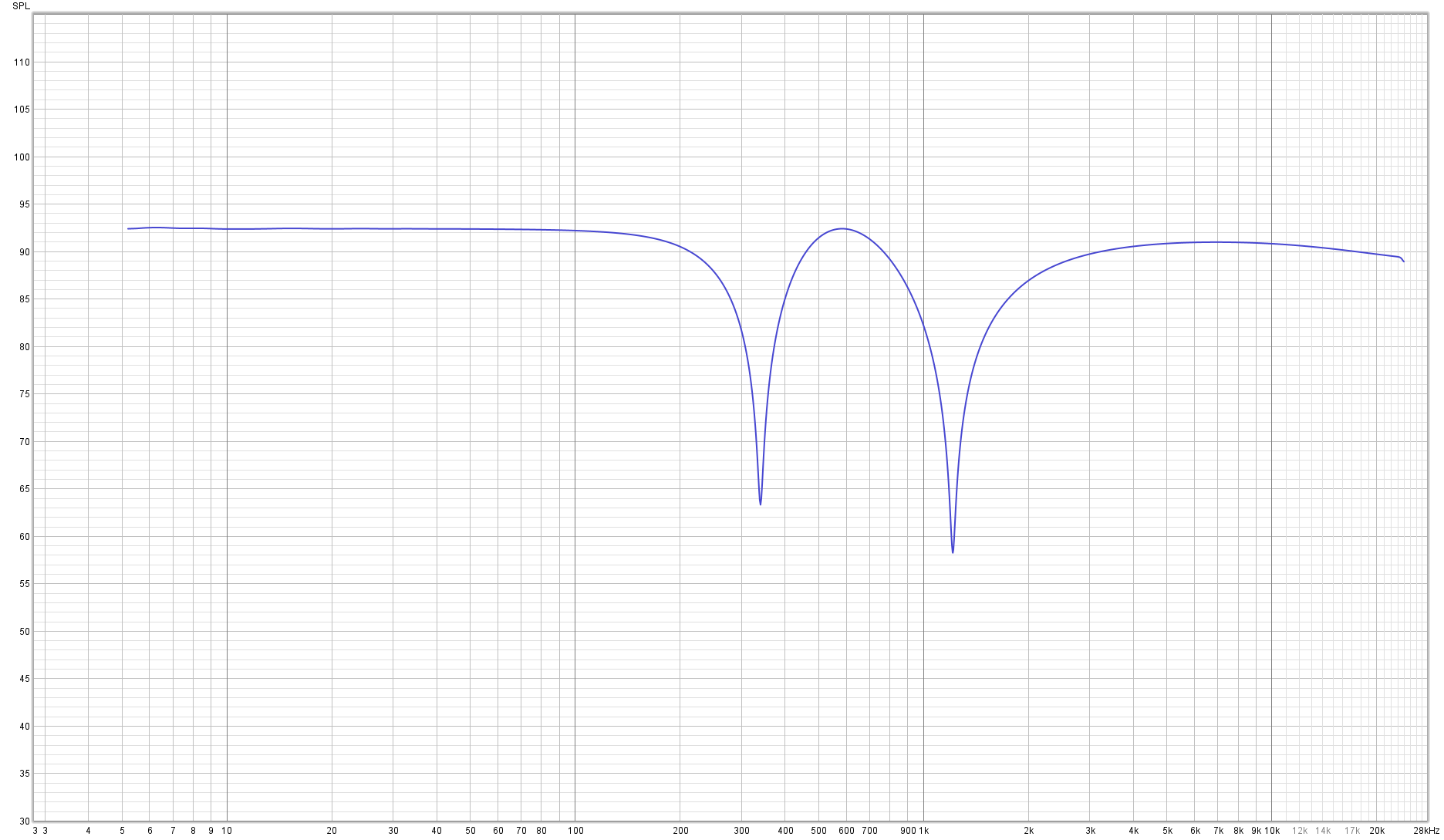
Clearly no good. This is a result of different frequencies arriving at different points in time because the speakers have different phase responses. Some frequencies will sum causing peaks and others will cancel themselves out causing dips. You could argue that not hearing things accurately is perhaps not the biggest deal considering most Atmos systems have these problems but working on a system like this will cause many headaches with the translation to Spatial Audio on headphones where you won’t have this interference and things will sound very different. It’s very common to pull things a little beyond stereo into the wides and dips like this could completely change your perception of the balance in the mix.
This is similar to what happens when you flip the polarity of one of your speakers in stereo except it’s happening at some frequencies and not others. Some kinds of crossovers require you to intentionally flip the polarity of one of the drivers. This means if you’re trying to pan between 2 different speakers, even if they’re both 2-ways with the same crossover point, the woofer or tweeter on one of them could have the opposite polarity. If you flip the polarity on one of them, one of the drivers will still be wrong. It’s like having your speakers “out of phase” except for only half the spectrum.
This happens regardless of if the speakers are from the same manufacturer. Best case scenario they have the same crossover point and kind of crossover so the only big different would be in the way the speakers roll off at the bottom where you’d end up with similar cancellations.
Working on an Atmos system which uses different speakers is like mixing in stereo with different speakers.
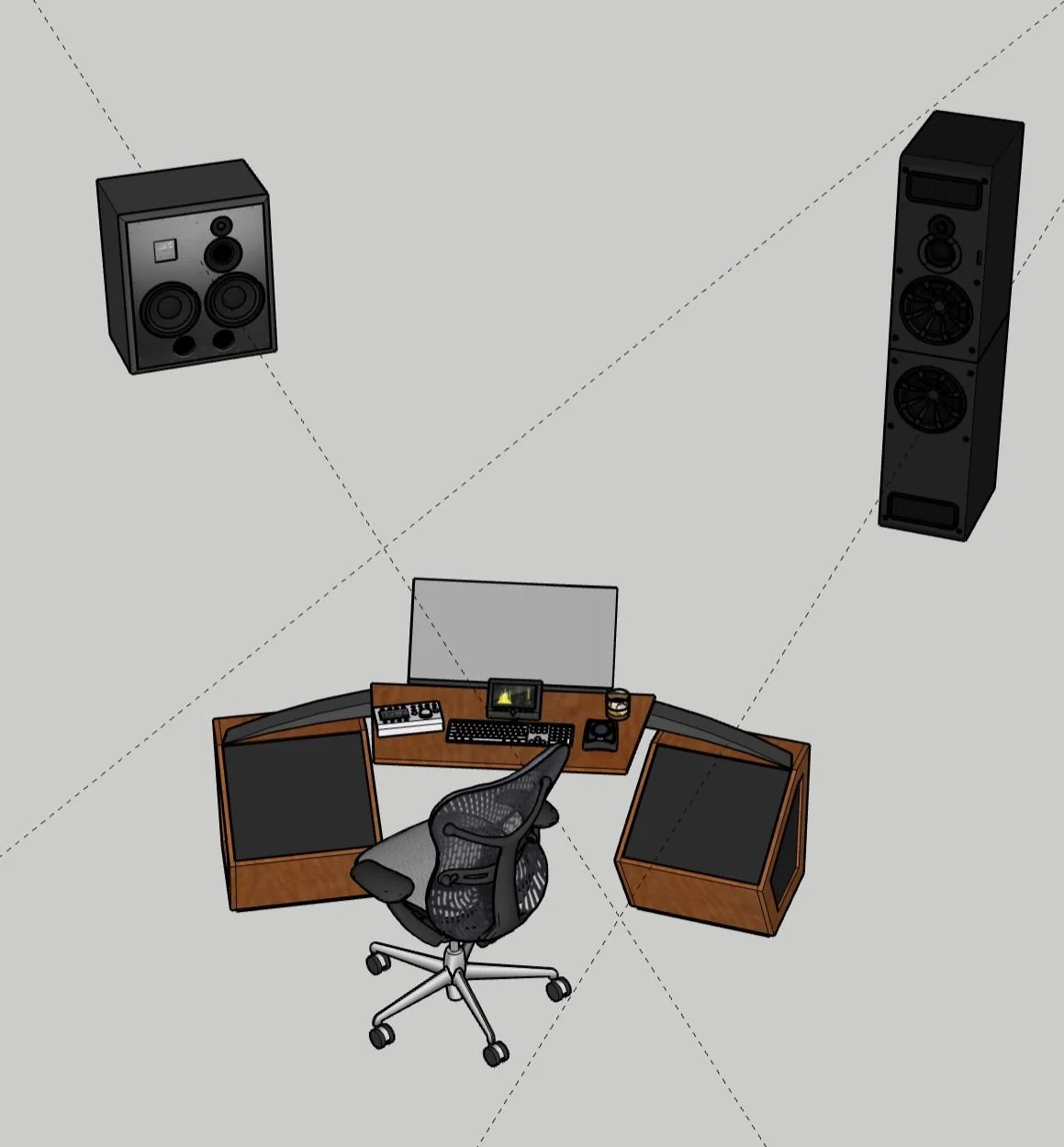
I mentioned there being some exceptions. This would be when the phase response is accounted for. Either in the speaker itself using FIR filters (like with Kii Three or D&D 8C) or with separate DSP that’s able to correct the phase response and match it between different speakers. In my own studio I use very different speakers with entirely different crossover points. It works because I correct the phase response with the miniDSP units used for crafting the crossovers and DSP for the speakers. This means I don’t have the cancellations when panning between the different speakers.
Time alignment between the speakers is just as important and will cause similar problems so the speakers must either all be the same distance to the listening position or use delay to time align everything. This is often a problem with the center speaker where all of the speakers are placed against the front wall instead of in an arch so the center channel ends up closer to the listener and things won’t work well if it isn’t delayed to match the distance of the L/R. A good rule of thumb is assuming sound travels 1’ per ms so if your center channel was 6” closer you’d want to delay it by 0.5 ms. Of course I wouldn’t recommend time aligning a system based off of this and it should be done using a tool like REW which lets you measure the delay to well below 0.1 ms.
If you’re building out an Atmos system I strongly recommend using the same speakers all around the room unless you’re planning to go through great lengths to correct the phase response. If you’re not able to use the same speakers as the main stereo speakers in the room, I’d get an extra pair of the speakers for the Atmos system to use as the L/R with Atmos. Not only will this improve your listening experience but you’ll be able to more accurately judge what’s going on in the mix rather than leaving it to guesswork from having all sorts of funky interactions between the speakers.