NS10 Crossover Mod
This project was done back in 2022 in collaboration with Jesse Ray Ernster. The goal was to replace the crossover and see how much the speakers could be improved. I ended up borrowing a pair from a friend and in turn offered to give them back with the new crossovers (if he preferred it over the stock).
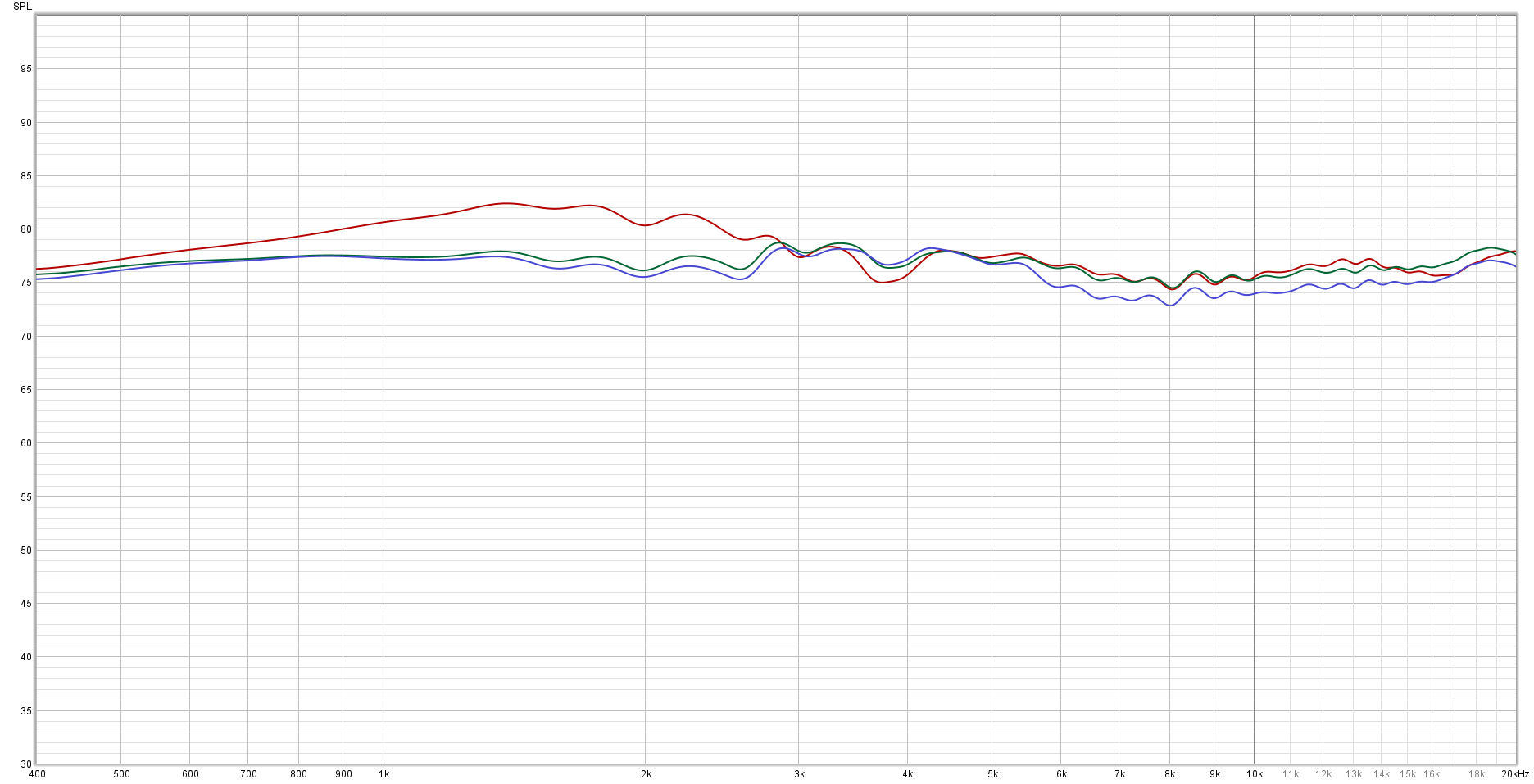
NS10s famously have a peak at around 1.7 kHz. One of the goals with the new crossover was to fix that. Ultimately we ended up not sharing much about this project for two main reasons. Firstly, and most importantly, fixing the peak in the response made the NS10s largely not sound like NS10s anymore and no longer offer the skewed perspective people are used to and like (or potentially hate) about them. Secondly, it wasn’t worth the cost since NS10s are cheap speakers. The quality of the drivers will always be a limiting factor. You’d be better off buying different speakers rather than spending $100 on a new crossover for them unless you really love everything else about them.
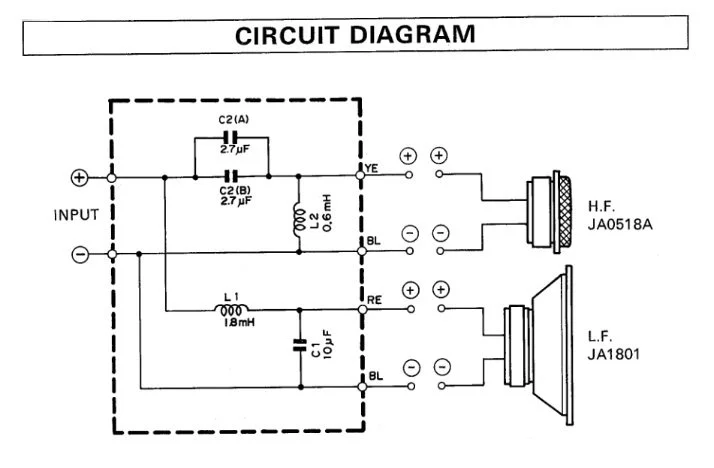
As far as I can tell, the peak in the response comes from trying to keep cost down. I haven’t found any evidence to suggest it was intentional. Some claim it’s there to counteract reflections off of a console but these were designed as domestic speakers. The crossover design I ended up with is remarkably similar to the original but with 2 extra parts so I imagine for an extra $5 they could’ve designed a significantly flatter speaker.
There’s some discourse relating to NS10s being “fast” and having better “transients” because of the paper cone or some other mystical component. This is somewhat true but it’s nothing particular to the NS10s. There’s no such thing as a woofer being faster or slower in any way that’s separate from its frequency response. If a woofer can move faster then it means it can play higher frequencies. A low pass filter effectively limits the speed. Having said that, a sealed speaker can be considered “faster” in that it limits the phase response so frequencies are played closer together in time. Having a speaker that extends lower may feel “slower” simply because it’s playing lower frequencies. The combination of NS10s being sealed and not extending very low make them feel fast. There can be some subtler aspects like resonances and cabinet volume but for the most part, any sealed speaker with a similar frequency response would have those same speed qualities as NS10s.
It’s important to note that I was working with the NS10M version of the NS10s. The crossover doesn’t work with all versions.
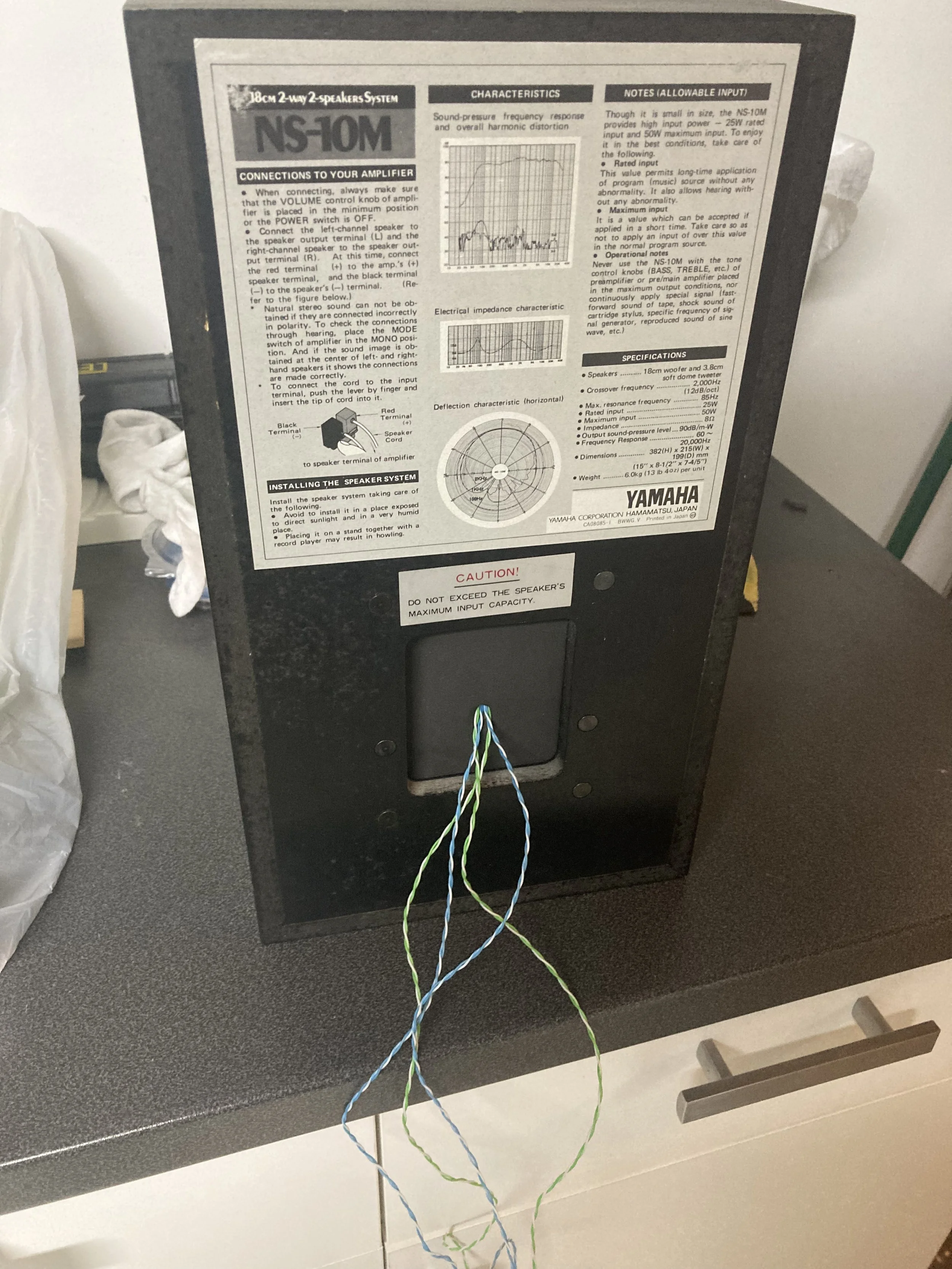
My first step in modding the speakers was measuring them with the original crossover, then removing the crossover and changing out the back plate with one that allowed me to connect to each driver separately. I could then measure each driver separately and work on the crossover outside of the speakers. Below are the measurements with the original crossover and each individual driver without the crossover. I also took horizontal and vertical off axis measurements to get a “spinorama”.
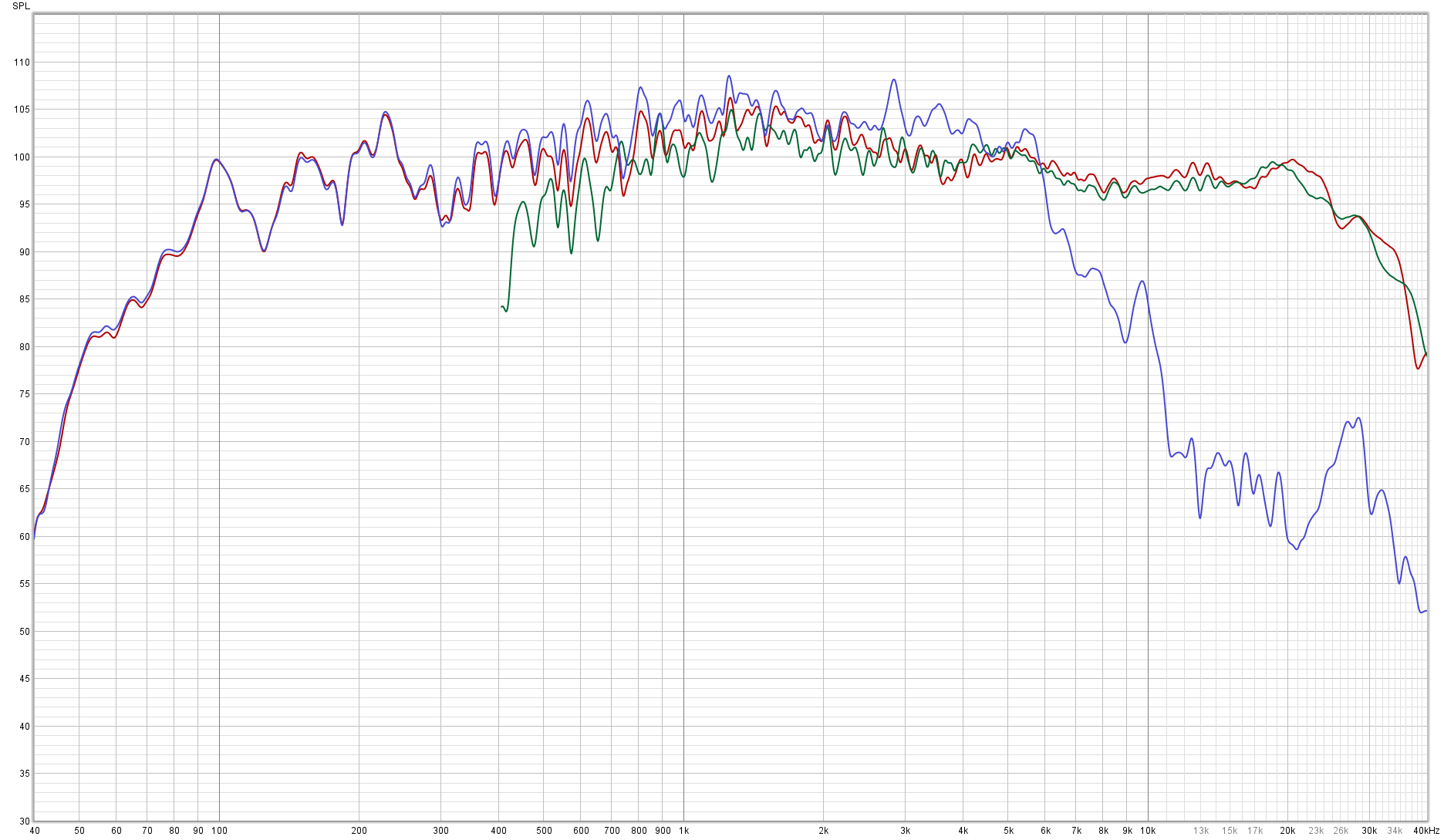
You’ll notice the woofer (blue) has a rising response creating the peak at 1.7 kHz which comes through with the original crossover. The tweeter (green) may seem like it extends pretty low but distortion rises quickly below around 2 kHz. Some higher end tweeters will handle low crossover points but not this one. This means the woofer needs to play fairly high to meet the tweeter and is into its break up region where it essentially stops working correctly. Fortunately with a paper cone the break up is spread out over a wide region making it less objectionable.
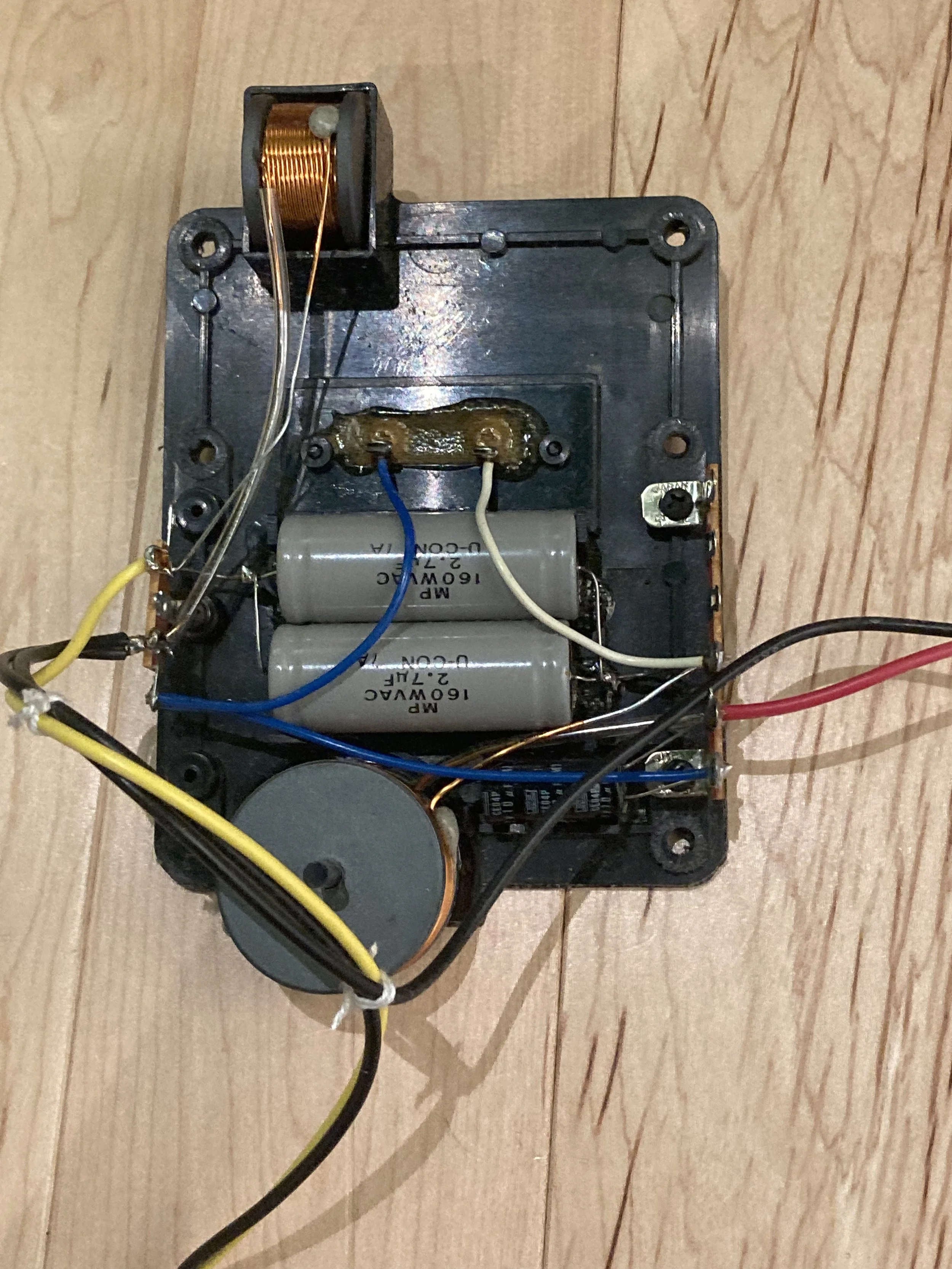
Looking at the original crossover, the components used are the worst you can get. Electrolytic capacitors and iron core inductors. These should generally be avoided in crossovers as they color the sound significantly. The best practice is usually to use film capacitors and air core inductors.
When measuring each driver, I did it in such a way where I could measure the timing difference between them. This is crucial when designing passive crossovers. If you don’t factor it in, your filters won’t work out. The timing is based on both the distance between the voice coil of each driver and the front baffle (the woofer’s voice coil sits further inside the cabinet so its sound takes longer to reach you) and where you choose to set the acoustic center. This is typically either at tweeter height or between the woofer and tweeter. When you change the height, you change your distance, and therefore timing, to each driver.
In addition to measuring the frequency response and timing information, I used the Dayton DATS to measure the impedance and T/S parameters of each driver. Drivers are a complex mechanical and electrical device with many different properties referred to as the T/S parameters. The crossover components react to the driver and give it a particular response. In other words, you can’t simply design a 2 kHz passive high pass filter. You need to design a circuit specifically for the driver you’re working with which gives you a 2 kHz high pass filter. On a different driver that same circuit will do something different.
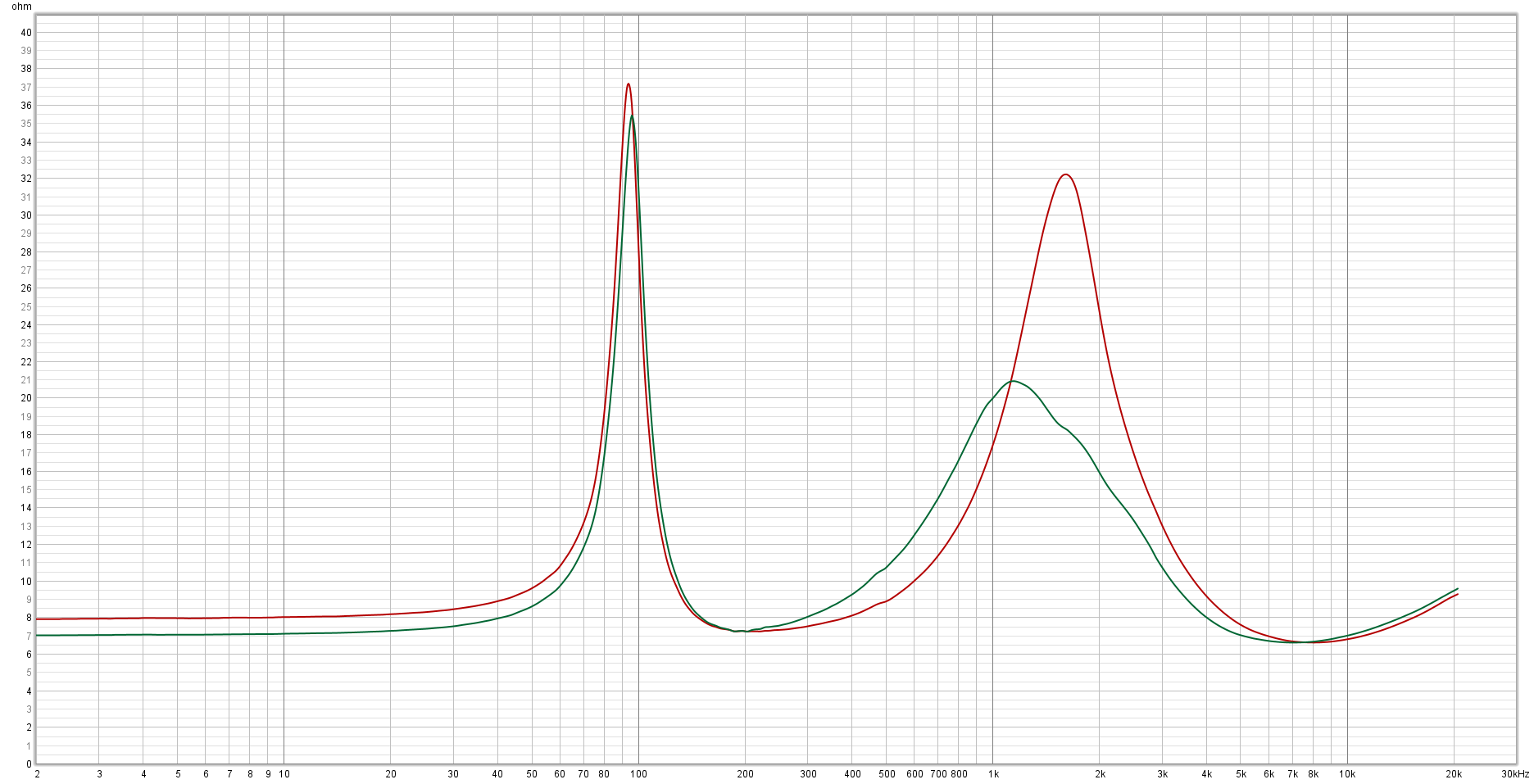
Measuring with the DATS system is somewhat similar to measuring the frequency response except you connect the device to the speakers, it does a sweep, and it measures what’s happening on the wires instead of using a microphone. For anyone interested, below is the impedance response of the old crossover (green) and my crossover new(red).
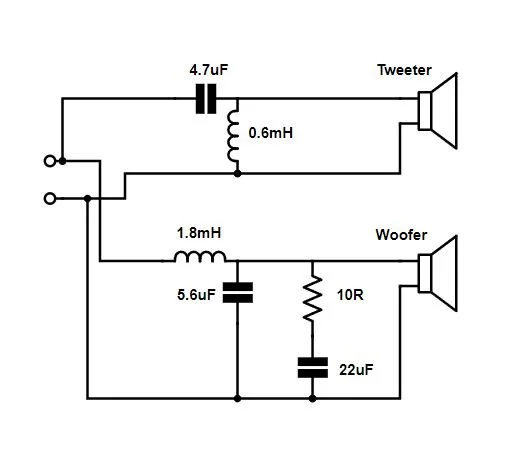
I took the various measurements and imported them into a program called VituixCAD which allows me to simulate the response with a passive crossover. After experimenting with many different options, what I ended up with is very close to the original crossover design. The tweeter is crossed slightly higher but its response is otherwise unchanged. The biggest change comes from knocking down the peak caused by the woofers rising response.

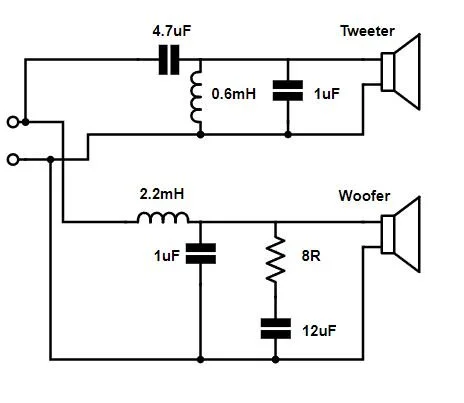
I ended up with an alternate option which differed more from the original crossover design and tamed the top end. This made the speakers feel even less like NS10s and more towards something balanced (IMO). It’s perhaps similar to the tissue paper trick.
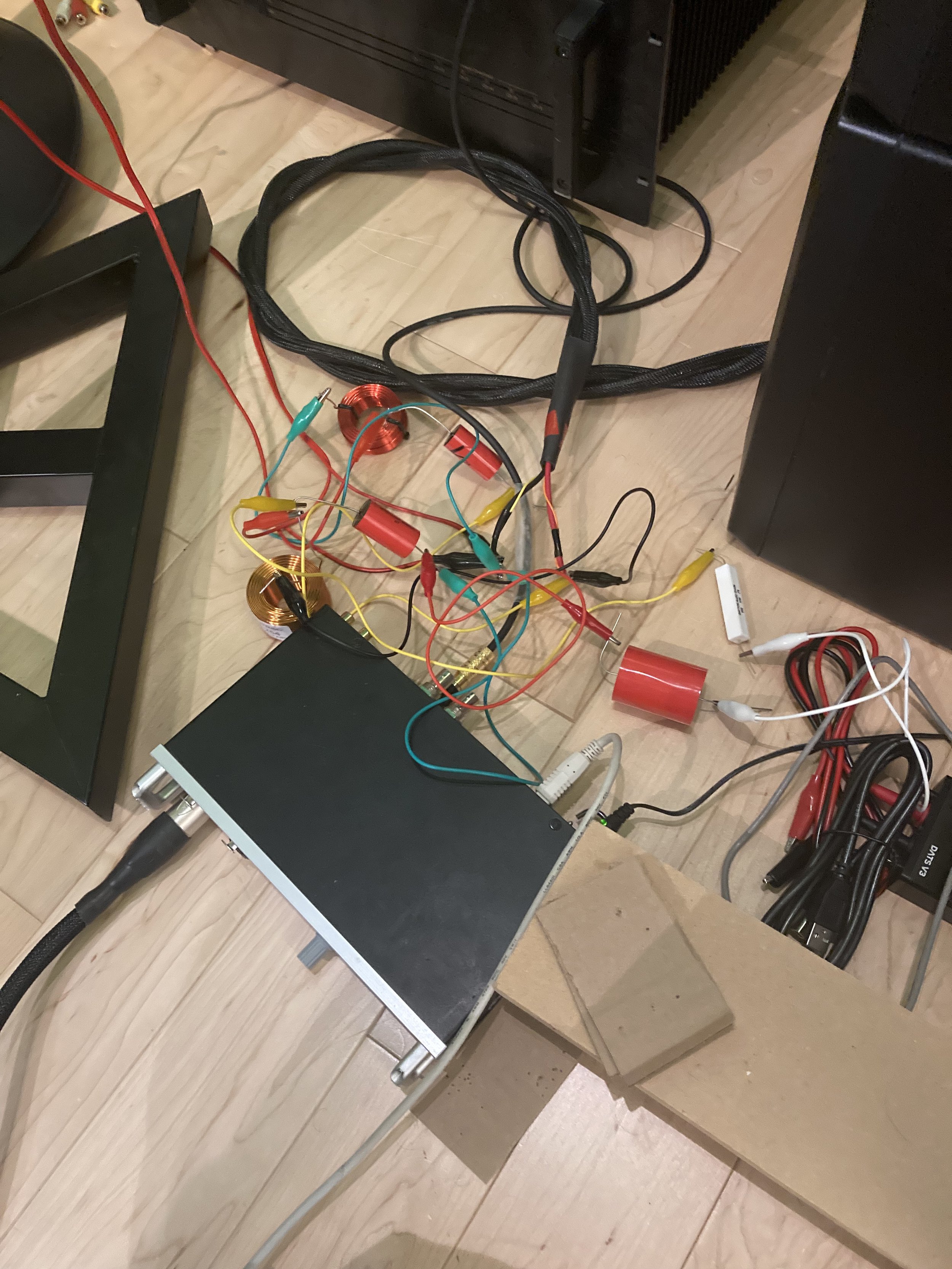
The next step was to order the components for these crossover designs. The biggest part of designing passive crossovers is listening. Every component changes how things sound. Particularly the capacitors. There’s copper foil, silver foil, filled with oil, wax… You could spend $5 or $300 for capacitors with the same value.
You could build this crossover with a level of parts quality similar to the original crossover but that would severally degrade the sound quality. If you were to rebuild the original crossover design using higher quality parts you’d get a big increase in sound quality without losing the peak in the response. I went with fairly budget friendly but good quality components. Higher end parts would largely be wasted based on the limited potential of the drivers. Some might argue against this.
The crossover worked as designed so most of the time spent listening and tweaking was for trying different capacitors and inductors. Below are the measurements of the original crossover (red), my crossover (green), and my alternate design (blue).
With the design finalized, I 3D printed a new back plate to hold the new components and replace the binding posts which were very low quality. Based on the way the plate is screwed into the speakers, it’s a little tricky to design a new plate unless you’re OK with putting some new screws into the cabinet. The plate gets bolted onto 6 standoffs in the cabinet.
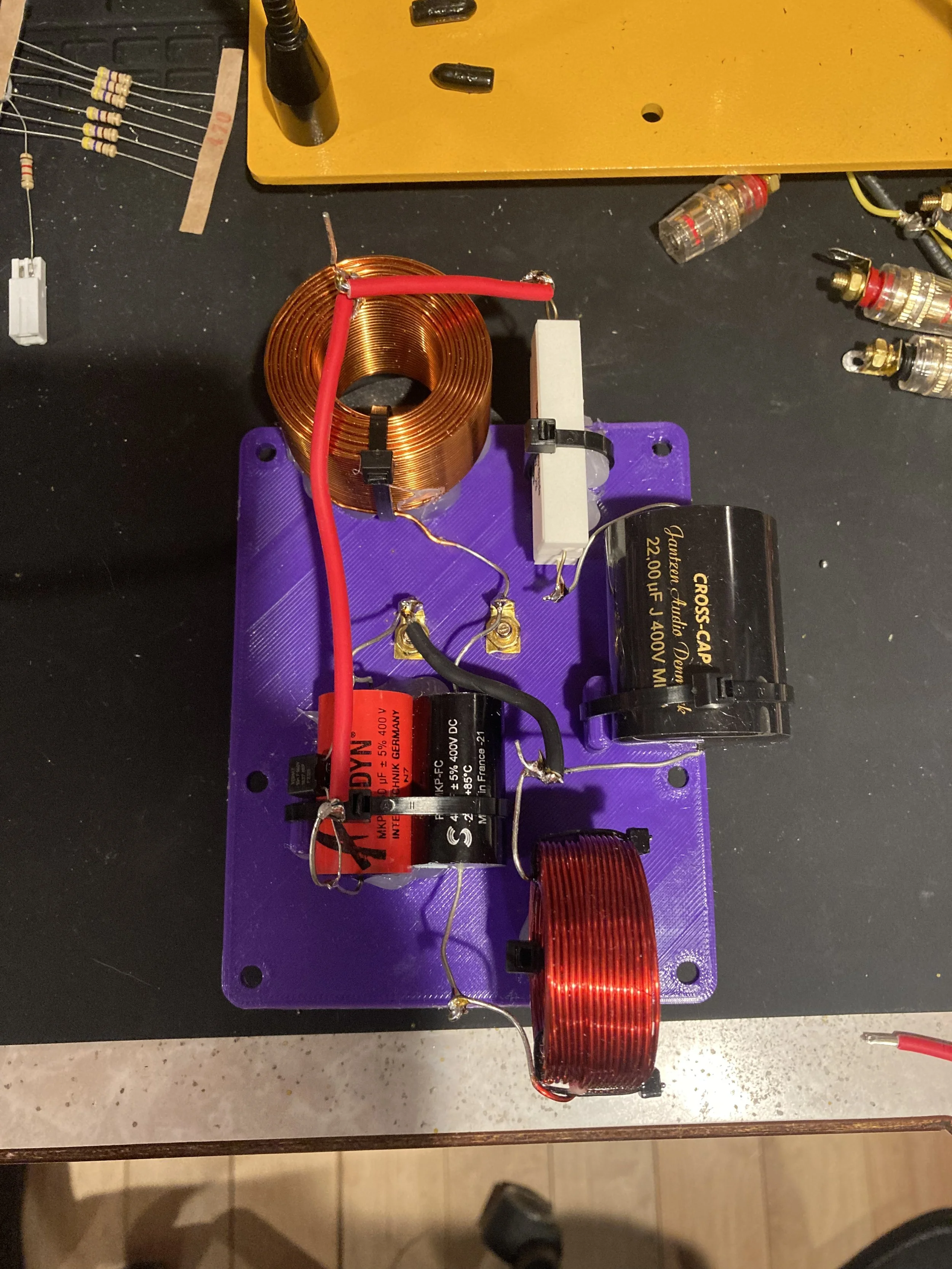
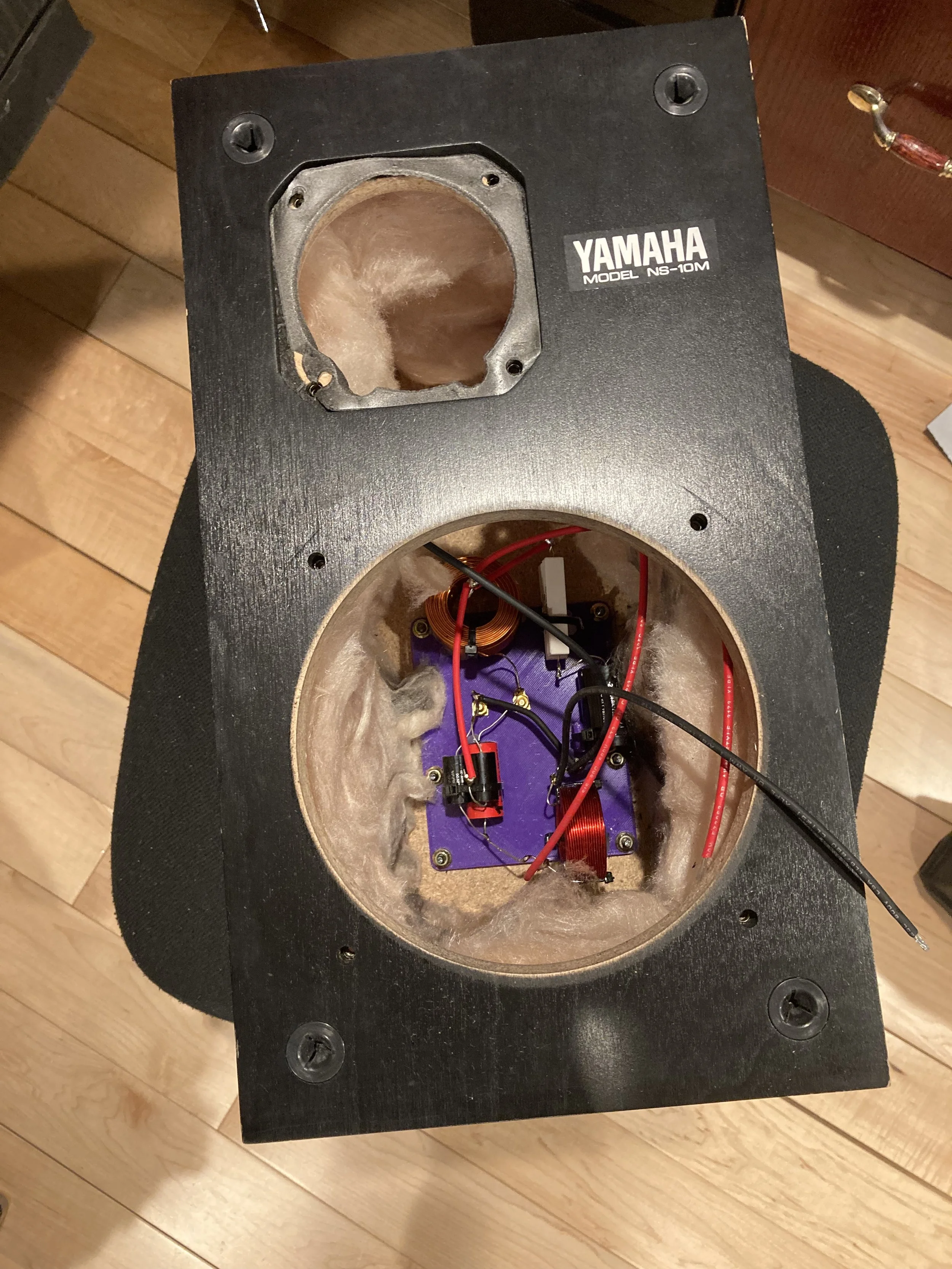
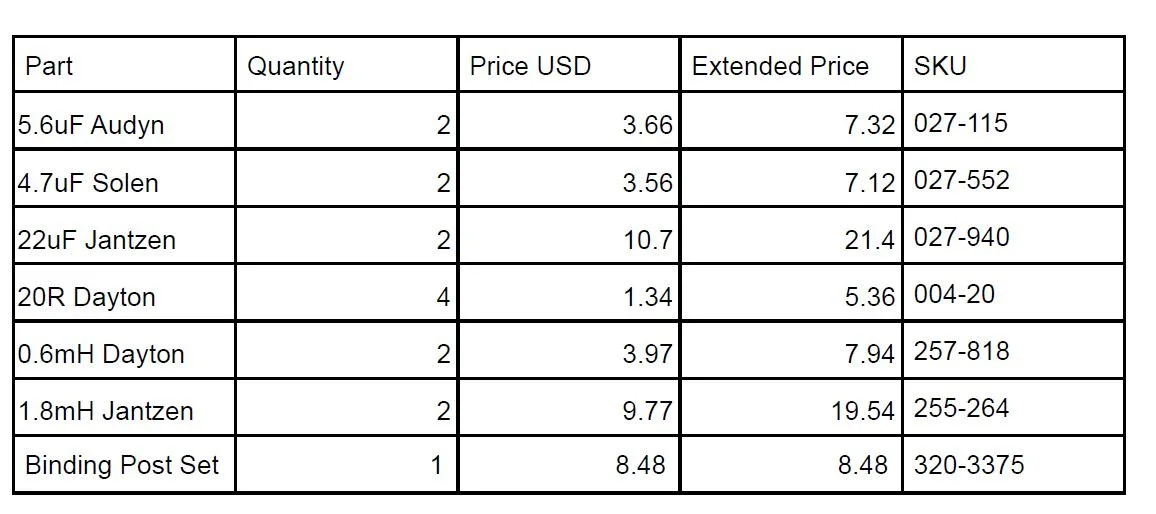
Below is the parts list for building a pair with SKUs from Parts Express. The 20R resistors are used in parallel to give 10R with a higher power rating. This shouldn’t be necessary but doesn’t hurt. The cost comes out to around $75 plus the new plate.
I’m not sure I’d recommend anyone replace their NS10 crossovers. As mentioned before, it removes a large part of why people like NS10s even if you are “fixing” the speakers and making them objectively better. Perhaps if you already own a pair you’re not using and want to try making them less obnoxious. Otherwise I’d keep them as is or get new speakers entirely. You could try rebuilding the original crossover design with better parts but again, I’m not sure there’s much value if you like and are used to how they sound.